

An interview with Beatrice Nelson-Beer, Chief Legal Officer at Lifeplus International and Managing Director at Lifeplus Europe.
In today’s business environment, the role of the General Counsel extends well beyond interpreting the law. As organisations face increasing regulatory complexity, geopolitical uncertainty and heightened stakeholder expectations, legal leaders are expected to provide not only legal expertise, but also strategic judgment, commercial insight, and trusted leadership.
The most effective General Counsel help organisations navigate complexity without losing sight of their purpose. They build relationships before crises emerge, enable responsible growth, and foster a culture where governance, integrity, accountability and business success reinforce one another.
The following conversation explores how legal leadership is evolving – and why trust, collaboration and sound judgment have become some of its most valuable assets.
Corporate reputation is often described as a company’s most valuable asset. What role should the General Counsel play in protecting and strengthening that reputation, particularly in times of uncertainty or crisis?
Corporate reputation is built over years, but it can be challenged in a matter of hours. In my experience, the General Counsel has an important role not only in protecting the company legally, but in helping the organisation understand the broader consequences of the decisions it makes. This means assessing legal and regulatory exposure, preserving privilege where appropriate, ensuring that decisions and processes are properly documented, and working closely with senior management and communications teams so that the organisation responds consistently and responsibly.
In a crisis, the legally safest response is not always the best response for the reputation of the business. The role of the General Counsel is no longer limited to assessing legal exposure. It is to help leadership make decisions that protect both the business and the values on which its reputation is built. Ultimately, reputation is a reflection of culture. The way an organisation responds under pressure often says more about its values than any corporate statement ever could. This requires considering the interests of employees, customers, partners, regulators and other stakeholders, while also anticipating how those decisions will be perceived externally.
This requires the General Counsel to combine legal judgment with sound business judgment, governance awareness and a deep understanding of the external environment. It also means being willing to ask difficult questions – not simply: “Can we do this?” but “Should we do this?”, “How will this be understood?” and “Does this reflect who we say we are as a company?”
The most effective reputation management therefore starts long before a crisis. Strong governance, effective compliance frameworks and a culture in which people feel safe to raise concerns early are among the strongest safeguards of integrity and long-term reputation.
What is the most important lesson you have learned about leadership through managing a crisis, and how has it shaped your approach as a senior legal executive?
One of the most important lessons I have learned is that during a crisis, people need clarity more than they need perfection. The General Counsel often becomes the stabilising presence, ensuring decisions remain legally defensible while the organisation continues to move forward.
This is rarely a moment when you have all the information you would like to have. Circumstances change quickly, different stakeholders have different priorities, and decisions often need to be made before every question has been answered.
Our first responsibility is to establish what we know, what remains uncertain and what requires immediate action. Once there is clarity around the facts, better decisions naturally follow.
Leadership in those moments means remaining calm, separating what you know from what you assume. It also means reinforcing confidence. People look to leaders not only for legal direction, but for reassurance that the organisation will act consistently with its values, even under pressure.
The role of the General Counsel is therefore not simply to identify risk, but to empower management to make informed ethical and value-driven decisions within that uncertainty. The General Counsel should bring structure, perspective and sound judgment to the discussion. It is not about having every answer immediately; it is about asking the right questions, identifying the next steps and ensuring that decisions remain principled, legally defensible and commercially sound under pressure.
It has also taught me the importance of communication. Silence creates uncertainty, and uncertainty is quickly filled with assumptions. You may not always be able to provide a complete answer, but you can communicate what you know, what you are doing and what people can expect.
That experience has shaped my leadership style considerably. I try to bring perspective and calm into difficult situations, keeping people focused on what actually matters.
As businesses expand across borders, how can legal leaders help balance growth ambitions with the increasing complexity of regulatory, governance and cultural expectations?
International growth requires more than understanding the law in each market. A model that works extremely well in one country may encounter very different regulatory expectations, cultural sensitivities or stakeholder perceptions.
Working across different legal cultures has taught me that successful expansion requires legal leaders to understand both the global strategy and the local reality. Respecting local laws also means respecting local cultures. Sustainable international growth depends on balancing consistent corporate values with an appreciation of different legal, cultural and business environments.
Our role should not simply be to identify reasons why something cannot be done. It should be to help leadership understand the boundaries, assess the real risks and find a responsible path forward.
That requires bringing legal and compliance expertise into the conversation early. When legal is involved only at the end of the process, it can easily become the function that says “no”. When we are involved from the beginning, we can help shape the strategy itself.
The General Counsel plays a critical role in translating complexity for the business: identifying material risks, distinguishing between legal requirements and risk appetite, and helping leadership determine where a global approach is appropriate and where local adaptations are necessary.
International expansion is ultimately a team effort. Legal, compliance, commercial and operational teams all bring different perspectives, and the best outcomes come when those perspectives are brought together early rather than sequentially.
The objective should not be to remove all risk from international growth – that is neither realistic nor commercially desirable -but to ensure that the organisation understands the legal and regulatory implications of its choices and make those decisions deliberately, transparently and in a way that reflects the organisation’s values and long-term objectives.
The GC role has evolved significantly over the past decade. In your view, what capabilities will distinguish the most effective legal leaders supporting international businesses in the years ahead?
Legal technical excellence remains the foundation of the role, but it is no longer enough on its own.
The most effective legal leaders will need strong commercial judgment, cultural intelligence, communication skills and the ability to operate comfortably in ambiguity. They will also need to understand geopolitical developments, technology and AI, data, reputation and the changing expectations of regulators and society.
Perhaps most importantly, they need to understand the business itself.
A General Counsel cannot be a strategic adviser if they only understand the legal question. A strategic legal adviser understands not only the law, but also how the business creates value, where its pressure points lie, what matters to the customer and employees, and what leadership is ultimately trying to achieve.
Not all legal risk should prevent a business decision. The General Counsel needs to explain the nature and potential consequences of the risk, identify possible mitigations and enable the appropriate decision-maker to make an informed choice.
The General Counsel must remain an independent legal voice while helping cultivate a culture where integrity and ethical decision-making are embedded throughout the organisation rather than viewed solely as the responsibility of the legal function. That combination of independence, judgment and business understanding is what allows legal leadership to become genuinely strategic.
I also believe intellectual agility will become increasingly important. The environment in which international companies operate is changing too quickly for any of us to assume that what worked five years ago will continue to work tomorrow.
How can General Counsel build trust and influence within the executive team before a crisis occurs, ensuring that legal is viewed as a strategic partner rather than simply a risk adviser?
Trust is built before you need it. It is earned through consistency, accessibility and demonstrating that legal is invested in helping colleagues succeed while upholding the organisation’s values – not simply in identifying what could go wrong.
For legal leaders, that means being present in the business when things are going well -not appearing only when there is a problem. It means understanding the business objectives, listening to colleagues, offering solutions and being willing to participate in conversations that do not initially look like “legal” matters.
In my experience, credibility also comes from being proportionate about risk. The General Counsel needs to understand the business well enough to differentiate between a manageable legal risk and one that genuinely threatens the organisation. If everything is presented as critical, eventually nothing feels critical. The executive team needs to know that when the General Counsel raises a serious concern, there is a good reason for it.
At the same time, being a strategic partner does not mean always agreeing. Sometimes our responsibility is to challenge decisions or ask difficult questions that protect the organisation’s long-term integrity, even when those conversations are uncomfortable. But challenge is much more effective when it comes from a relationship built on trust and a genuine understanding of the business.
If that relationship exists before a crisis, legal naturally becomes one of the voices leadership turns to when the stakes are the highest.
Looking ahead, what do you see as the greatest challenge – and the greatest opportunity – for legal leaders operating in an increasingly global and interconnected business environment?
The greatest challenge is probably the speed and interconnectedness of risk.
A regulatory development in one market, a geopolitical event in another, or an issue that begins on social media can very quickly become a global business and reputational issue. Legal leaders are increasingly expected to understand how these different risks connect rather than treating them as separate matters.
But that is also our greatest opportunity.
Legal leaders now have the opportunity to contribute far beyond the traditional boundaries of the legal department. We can help organisations anticipate change, enter new markets responsibly, strengthen governance, foster a culture of integrity, protect reputation, and make better strategic decisions.
The future of legal leadership is not about eliminating risk. International business will always involve risk. It is about helping the organisation understand which risks are acceptable, which are not, and how to move forward with confidence and integrity.
The future belongs to legal leaders who can transform complexity into clarity, helping organisations make confident decisions while remaining true to their values, earning the trust of their stakeholders and building resilient organisations for the long term.
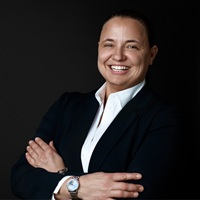
Chief Legal Officer | Managing Director
Lifeplus International | Lifeplus Europe
Luxembourg